
Written by :
Published on :

The new chairperson of the Commodity Futures Trading Commission (CFTC), Michael Selig, says he is content with having prediction markets like Kalshi fall under his agency's jurisdiction rather than the states.

His message conflicted with the testimony he gave back in November in front of the Senate Committee on Agriculture, Nutrition, and Forestry, which is the Senate group responsible for the CFTC. A number of Senators represent states that regulate the sports betting sector. States are considered among the biggest beneficiaries of sports gambling regulation thanks to the tax windfall that has come with it.
“Where jurisdictional questions are at issue, the commission has the expertise and responsibility to defend its exclusive jurisdiction over commodity derivatives,” Selig said Thursday in remarks posted to the CFTC’s website.
Selig says he will direct the regulator to get involved with court cases about sports event contracts, and to write new prediction market rules, as the agency appears set to take a much more active stance in defending the controversial vertical.
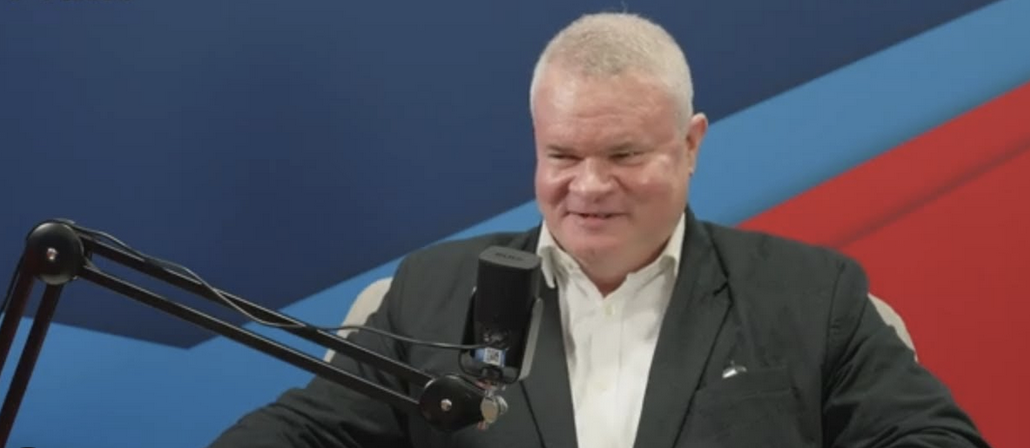
Joe Brennan, Jr (pictured above), who was at the forefront of spearheading efforts to toss out decades of sports betting prohibition that led to the US Supreme Court ushering in legalization in 2018, noted that the "CFTC can’t write rules that contradict the text of the law."
Brennan Jr. began organizing efforts in 2008 to challenge the federal ban on sports betting, particularly focusing on the state of New Jersey, as the test case. He assembled supporters and helped plan a strategy that included lawsuits and legislative action. Gambling911.com was involved in these efforts.
"Anyone with a stake in Prediction Markets should be headed up Capitol Hill to do the hard work of making their case to lawmakers to amend the CEA instead of relying on administrative fiat."
A handful of US states object to allowing prediction markets into their jurisdictions. There are currently nineteen federal lawsuits pending at various stages grappling with the app's legality.
The Massachusetts Attorney General sued Kalshi in state court (Suffolk Superior Court) in September 2025, arguing Kalshi’s sports event contracts amount to unlicensed sports wagering; the court later granted a preliminary injunction on Jan. 20, 2026 (with subsequent procedural developments).

New Jersey, Nevada, Maryland, Tennessee, New York, Ohio and Connecticut regulators have sent out cease and desist letters.
The Administration of US President Donald Trump has taken a mostly favorable stance towards these prediction markets. The president's son, Donald Trump, Jr,, joined the Kalshi board as a strategic advisor early last year.
During his testimony in November, Selig seemed willing to let federal judges independently decide whether the CFTC should become a sports betting regulator on a permanent basis.
Sportico noted that Selig repeatedly told senators on Nov. 19 that he did not feel it was appropriate to opine on whether sports prediction market contracts should fall under the CFTC’s federal purview rather than state gaming commissions, as companies such as Polymarket, Kalshi and Robinhood have argued.
Kalshi insists state laws do not apply to their business model.
"Mountains of authority confirm that the [federal law] preempts application of state law," wrote Kalshi lawyer Neal Katyal in a brief this week in a case pending before the 4th U.S. Circuit Court of Appeals. "Letting each state regulate [prediction markets] differently would plainly frustrate Congress's aim of bringing futures markets 'under a uniform set of regulations.'"
Gaming attorney Daniel Wallach asserts that "Kalshi's linguistic maneuvering" is simply a way to "skirt state laws".
"They're engaging in gambling, no matter what they're trying to call it," Wallach said. "If you look at their offerings, including parlays, prop bets, on sports, that's the epitome of sports gambling."
- Chris Costigan, Gambling911.com Publisher